Rhinoplasty (Nose Reshaping Surgery)
Refine Your Profile, Enhance Harmony
Rhinoplasty is a sophisticated surgical procedure to reshape the nose for aesthetic enhancement or to improve breathing function. Performed by Consultant Plastic Surgeon Mr Ahmed Ibrahim, this operation requires precise artistry and a deep understanding of nasal anatomy to create a natural-looking nose that is in harmony with your facial features.
What is Rhinoplasty?
This surgery can modify the bone, cartilage, and soft tissues of the nose to:
Aesthetic Rhinoplasty: Change the size, shape, and proportions of the nose (e.g., reducing a dorsal hump, refining the nasal tip, narrowing the bridge).
Functional Rhinoplasty: Correct structural issues like a deviated septum or collapsed nasal valves to improve airflow and breathing.
Revision Rhinoplasty: Correct problems or unsatisfactory results from prior nasal surgery.
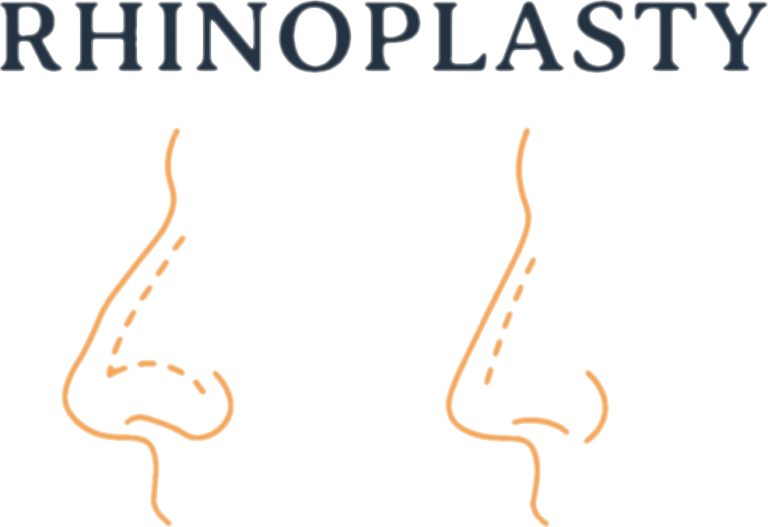
Mr Ibrahim uses both open (small incision across the columella) and closed (incisions inside the nostrils) techniques, choosing the approach that allows the most precise result for your individual needs.
The Ideal Candidate
You may be a suitable candidate if you:
Are physically healthy and a non-smoker.
Have a fully developed nose (typically from mid-teens onwards).
Have specific concerns about your nasal appearance or function.
Possess realistic expectations about what can be achieved. A good candidate seeks improvement, not perfection.
Your Surgical Journey with Mr Ibrahim
Consultation: This is a detailed discussion. Mr Ibrahim will assess your nasal structure, skin quality, and facial balance. The risks and limitations will be thoroughly explained.
Procedure: Performed under general anaesthesia, surgery typically takes 2-3 hours. Internal structures are carefully reshaped before the skin is redraped. Splints may be placed inside the nose and a protective cast on the outside.
Recovery: Initial swelling and bruising around the eyes subside within 2 weeks. The nasal cast is removed after 1 week. Most return to social activities after 2 weeks. Strenuous activity must be avoided for 6 weeks. Subtle swelling, especially at the tip, can take 12 months or more to fully resolve.
Results: The new nasal shape is visible once the cast is removed, but the final refined result emerges as swelling completely subsides over a year. The goal is a natural, balanced, and functional nose.
Realistic Expectations & Key Considerations
Rhinoplasty is one of the most complex facial procedures. Perfect symmetry is not possible. There is a significant healing period where the nose undergoes many changes. Risks include bleeding, infection, breathing difficulties, septal perforation, need for revision surgery, and numbness. The final result is a partnership between the surgeon’s skill and your body’s unique healing process.
FAQ
1. How long does it take to see the final result?
While a dramatic change is visible after the first few weeks, it can take 12-18 months for all residual swelling to disappear, particularly in the nasal tip where the skin is thick. Patience is essential.
2. Will rhinoplasty improve my breathing?
If your breathing is impaired by a structural issue like a deviated septum or enlarged turbinates, a functional septorhinoplasty can be performed to correct this at the same time as aesthetic changes.
3. What is the difference between "open" and "closed" rhinoplasty?
In open rhinoplasty, a small incision across the columella (the tissue between the nostrils) allows the surgeon to lift the skin for a direct, unparalleled view of the nasal structures. This is often used for more complex changes. Closed rhinoplasty uses incisions only inside the nostrils, with no external scar. The choice depends on your anatomy and surgical goals.
4. What are the specific risks I should know about?
Key risks include: asymmetry, unsatisfactory aesthetic result, nasal obstruction, septal perforation (a hole in the septum), altered sense of smell, and the need for revision surgery (estimated at 5-15% of cases).
5. Will I have visible scars?
With a closed technique, there are no visible external scars. With an open technique, the tiny scar on the columella is usually very discreet and fades to be nearly invisible over time.
6. How painful is the recovery?
Discomfort is typically mild and managed with medication. The most common sensations are congestion and pressure from internal swelling, rather than sharp pain.
7. Can rhinoplasty be combined with other procedures?
Yes, it is frequently combined with procedures like a chin augmentation (genioplasty) to improve overall facial profile and balance, or with functional procedures like septoplasty.
8. Is it available on the NHS?
The NHS only funds rhinoplasty to correct a significant functional breathing impairment that has not responded to other treatments. Purely cosmetic rhinoplasty is not available on the NHS.