Facelift (Rhytidectomy): Comprehensive Facial & Neck Rejuvenation
Restore a Youthful, Natural Contour with Advanced Techniques
A facelift, or rhytidectomy, is a surgical procedure designed to address the visible signs of aging in the mid-face, lower face, and neck. Consultant Plastic Surgeon Mr Ahmed Ibrahim specialises in advanced facelift techniques, including the Deep Plane Facelift, to provide his patients with durable, natural-looking results by repositioning the underlying structures of the face, not just tightening the skin.
What is a Facelift?
A modern facelift goes beyond skin removal. It involves repositioning the deeper tissues—the muscle and fat layers—that have descended over time. Mr Ibrahim tailors the approach to each patient’s anatomy and goals, offering several advanced techniques:
SMAS Facelift: The established gold standard. The Superficial Musculo-Aponeurotic System (SMAS) layer is tightened through techniques like plication (folding) or imbrication (overlapping), providing a significant and long-lasting improvement.
Deep Plane Facelift: An advanced refinement. The dissection goes deeper to release the SMAS and cheek fat pads (mid-face deep fat compartments) as a single composite unit. This allows the entire structure to be lifted en bloc to its original youthful position. It is particularly effective for reviving the mid-face (cheeks and nasolabial folds) and can offer a potentially more natural look with reduced tension on the skin.
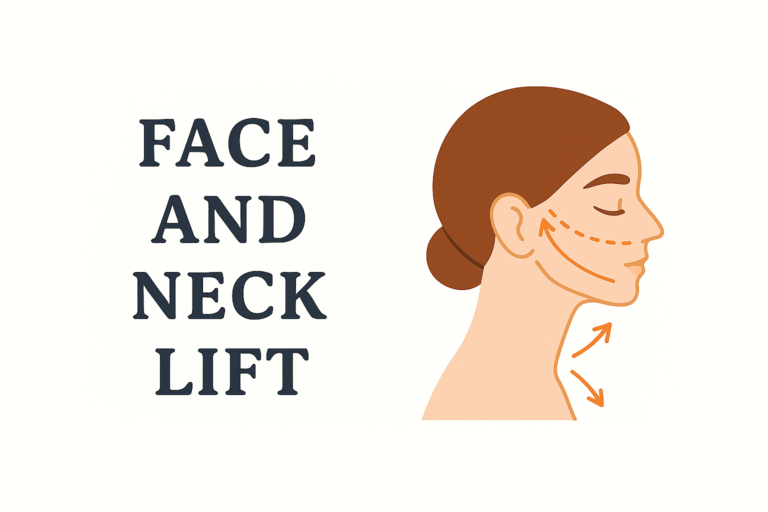
Neck Lift: Often performed concurrently, this addresses sagging neck bands (platysma muscles) and excess fat under the chin to restore a clean, defined jawline and neck contour.
The Ideal Candidate
The best candidates for a facelift with Mr Ibrahim are individuals who:
Show significant sagging in the mid-face, jowls, and neck, with good skin elasticity.
Have realistic expectations, seeking a refreshed version of themselves, not a different person.
Are in good physical and mental health, and are non-smokers or can stop well in advance.
Understand that a facelift improves the lower two-thirds of the face; the forehead and eyes are treated with separate procedures like a brow or eyelid lift.
Your Surgical Journey with Mr Ibrahim
Consultation: This is a detailed analysis. Mr Ibrahim will assess your bone structure, skin quality, and fat distribution. He will explain which technique (SMAS vs. Deep Plane) is best suited to your anatomy and discuss the placement of incisions, recovery, and realistic outcomes.
Procedure: Performed under general anaesthesia. Incisions are discreetly placed in front of and behind the ears, and within the hairline. The chosen technique is executed to lift and secure the deep facial structures. Excess skin is precisely trimmed, and incisions are closed. Surgery typically takes 4-6 hours for a comprehensive facelift and neck lift.
Recovery: A supportive bandage is worn for 1-2 days. Swelling and bruising are expected, peaking at 48-72 hours and subsiding over 2-3 weeks. Sutures are removed in stages over 1-2 weeks. Most patients feel comfortable in social situations after 2-3 weeks, with residual swelling fading over several months.
Results: The outcome is a rejuvenated, rested appearance with restored facial harmony. The deep structural support leads to results that are both dramatic and natural, avoiding a “pulled” look. While you will continue to age, you will always look years younger than if you had not had the surgery.
Realistic Expectations & Key Considerations
A facelift sets back the clock; it does not stop it. The goal is a significant, elegant improvement. All surgical procedures carry risks, including hematoma (the most common early complication), temporary or permanent nerve injury affecting facial movement or sensation, scarring, hair loss near incisions, and asymmetry. The Deep Plane technique, while offering distinct advantages, is more technically demanding and may involve a slightly longer initial recovery due to the deeper dissection.
FAQ
1. What is the main difference between a Deep Plane and a SMAS facelift?
The key difference is the depth of dissection and tissue release. In a SMAS lift, the SMAS layer is tightened. In a Deep Plane lift, the surgeon works beneath the SMAS, releasing and lifting the deep fat pads of the cheek along with the overlying muscles as one unit. This can allow for a more powerful repositioning of the mid-face with less tension on the skin.
2. Why might Mr Ibrahim recommend a Deep Plane facelift for me?
He may recommend it if you have significant descent of the mid-face (deep nasolabial folds, fallen cheek volume) and desire a very natural, long-lasting rejuvenation. It is also an excellent technique for patients with heavier facial tissues. He will recommend the technique that best addresses your specific aging pattern.
3. Does a Deep Plane facelift have a higher risk?
As a more advanced dissection, it carries a theoretically increased risk of temporary nerve weakness due to the deeper manipulation near motor nerves. However, in the hands of a highly trained and experienced surgeon like Mr Ibrahim, who has an intimate knowledge of facial anatomy, the procedure is very safe. The risk profile will be discussed in detail during your consultation.
4. How long do the results of a Deep Plane facelift last?
Both SMAS and Deep Plane facelifts offer long-lasting results, typically 10 years or more. The Deep Plane technique may provide exceptional longevity in the mid-face area due to the complete repositioning of deep tissues. Your lifestyle and genetics will also influence duration.
5. Where are the scars, and will they be visible?
Scars are strategically placed: in the natural crease in front of the ear, around the earlobe, behind the ear in the shadowed fold, and possibly extending minimally into the hairline. Meticulous closure ensures these scars mature into fine, inconspicuous lines over 12-18 months, easily concealed by hair and makeup.
6. What is recovery like compared to a SMAS lift?
Initial recovery is similar. Some patients undergoing Deep Plane technique may have slightly more swelling in the mid-cheek area initially, which resolves. The overall timeline for returning to normal activities is comparable.
7. Can a facelift be combined with other procedures?
Yes, it is commonly combined with:
Eyelid surgery (Blepharoplasty): To address aging around the eyes.
Brow lift: To elevate a sagging forehead.
Facial lipomodelling (fat transfer): To restore volume in the cheeks, lips, or temples.
Skin resurfacing (laser/peel): To improve skin texture and fine lines.
8. Is there an age limit for a facelift?
There is no strict age limit. The decision is based on biological age, skin quality, and overall health, not chronological age. Patients in their 40s to 70s are common candidates, provided they are healthy and have realistic goals.