Face Cosmetic Surgery
Achieve Natural, Refined Facial Aesthetics
Mr Ahmed Ibrahim is a Consultant Plastic & Reconstructive Surgeon with advanced expertise in facial aesthetic and reconstructive surgery. Understanding the delicate balance of facial anatomy, he performs procedures designed to rejuvenate, refine, and harmonise your features. Whether addressing signs of aging, enhancing facial contours, or correcting specific concerns, Mr Ibrahim prioritises natural-looking results that complement your unique appearance. Every procedure begins with a detailed consultation to understand your goals and develop a personalised surgical plan tailored to you.
Upper & Lower Blepharoplasty (Eyelid Surgery)
What is it?
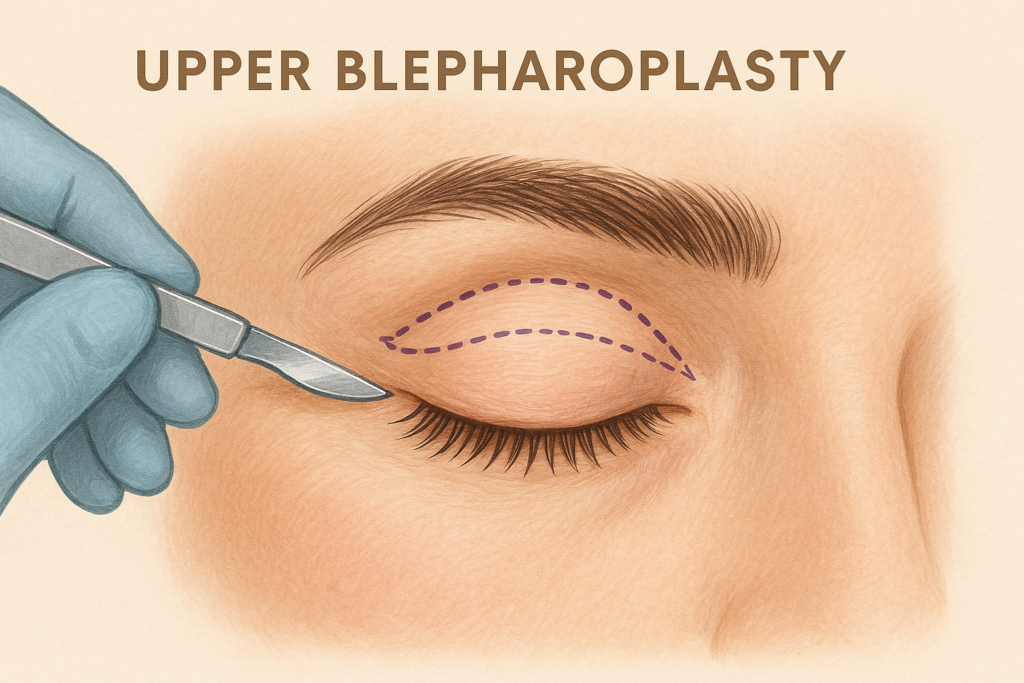
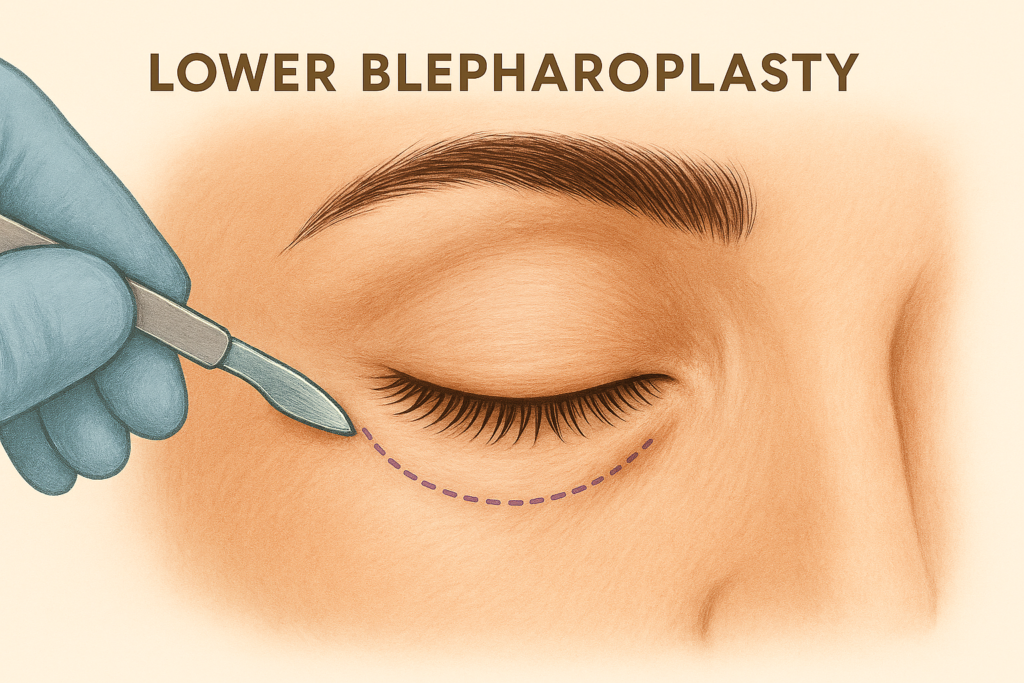
This surgery removes excess skin, muscle, and fat from the upper and/or lower eyelids. It addresses drooping upper lids that can impair vision and puffy bags under the eyes, creating a more alert and refreshed appearance.
What happens during surgery?
Usually performed under local anaesthetic with sedation (or general). For upper eyelids, an incision is made in the natural crease. For lower eyelids, the incision is just below the lash line or inside the eyelid (transconjunctival, leaving no visible scar). Excess tissue is removed or redistributed, and the incisions are closed with very fine stitches.
What is the recovery like?
- Hospital Stay: Day case.
- Initial Recovery (1-2 weeks): You will have swelling and bruising, peaking at 2-3 days. Cold compresses help. Stitches are removed around day 5-7. Eyes may feel dry, gritty, or watery initially.
- Returning to Work: Many return to work within 7-10 days, using camouflage makeup.
- Exercise: Avoid strenuous activity for 2-3 weeks.
- Final Results: Bruising fades in 2 weeks, but subtle swelling can take several months to resolve fully. Scars become virtually invisible in the natural creases.
What are the potential risks?
Temporary blurred vision, dry eyes, infection, bleeding, asymmetry, difficulty closing eyes (usually temporary), scarring, and, very rarely, ectropion (lower lid pulling down) or visual changes.
Direct Brow Lift
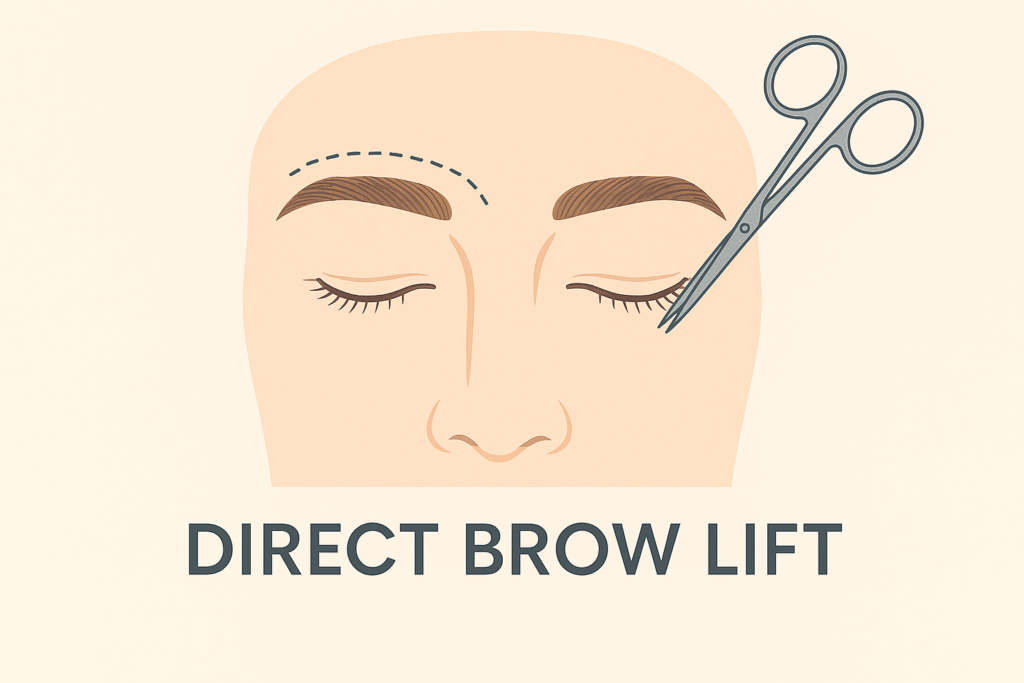
This technique involves removing a subtle, elliptical strip of skin and muscle directly above the eyebrow, within or just at the superior border of the brow hairs. When this strip is closed, it directly lifts the brow. It is particularly effective for correcting significant asymmetry or a heavy brow in patients with thicker, male-pattern skin.
The Ideal Candidate
You may be a suitable candidate if you have:
A noticeably low or sagging eyebrow position.
Significant eyebrow asymmetry.
A “hooded” upper eyelid caused primarily by the brow descent rather than excess eyelid skin.
Realistic expectations about the outcomes and scarring.
This procedure is often recommended for patients where an endoscopic or temporal brow lift may not provide sufficient lift.
Pinnaplasty (Ear Correction)
What is it?
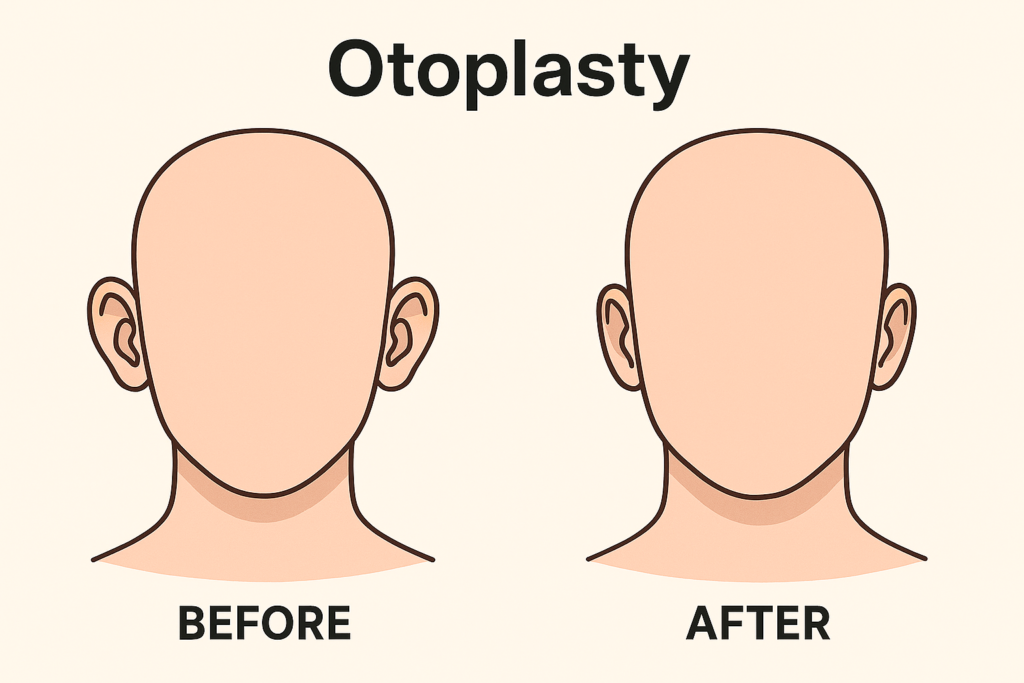
Surgery to correct prominent ears, usually by reshaping the cartilage to bring the ears closer to the head. It is commonly performed on children from age 5-6 but is also popular with adults.
What happens during surgery?
Performed under general anaesthetic (or local for adults). A small incision is made behind the ear to expose the ear cartilage. The cartilage is sculpted and folded into a new position using permanent stitches. The skin is stitched, and a head bandage is applied.
What is the recovery like?
- Hospital Stay: Usually a day case.
- Initial Recovery (1-2 weeks): A firm head bandage is worn for 1-2 weeks to protect the ears. Some discomfort and itching are common.
- Returning to Work/School: Children need about a week off school. Adults can often return to work within a week.
- Exercise: Avoid contact sports or activities where the ears might be bent for at least 3 months. A headband for sleeping is often recommended for several weeks.
- Final Results: Once the bandages are removed, the improvement is immediate, though some swelling remains. Scars are hidden behind the ear.
What are the potential risks?
Bleeding (haematoma) under the skin, infection, scarring, asymmetry, over-correction, relapse, and numbness.
Fat Transfer (Lipomodelling)
What is it?
This is a two-part procedure where fat is removed via liposuction from one area of your body (e.g., abdomen or thighs), purified, and then re-injected into another area to add volume and improve contour. Common uses include augmenting the breasts, buttocks (Brazilian Butt Lift), or rejuvenating the face.
What happens during surgery?
The procedure is performed under general anaesthetic. Stage 1: Liposuction is performed to harvest the fat. Stage 2: The fat is processed and carefully injected in small amounts into the target area to ensure it establishes a new blood supply and survives.
What is the recovery like?
Recovery involves healing at both the donor (liposuction) site and the recipient site.
- Hospital Stay: Usually a day case or one night.
- Initial Recovery: Compression garments are worn on donor sites. Swelling and bruising occur at both sites. In facial procedures, there can be significant initial swelling.
- Returning to Work: 1-2 weeks, depending on the extent.
- Final Results: A significant percentage of the transferred fat will be reabsorbed by the body in the first 6-8 weeks. The remaining fat is permanent. Final results are judged at 3-6 months.
What are the potential risks?
Risks include those of liposuction at the donor site. At the recipient site, risks include asymmetry, over- or under-correction, fat necrosis (lumps), infection, and calcification. In breast augmentation, it can complicate future mammography.
FAQ
Am I a good candidate for facial cosmetic surgery?
Good candidates are in good physical health, non-smokers (or willing to stop well in advance), have realistic expectations, and seek surgery for themselves. A detailed consultation with Mr Ibrahim will determine your suitability.
2. What can I expect during the consultation?
The consultation is your opportunity to discuss your goals. Mr Ibrahim will examine your facial anatomy, discuss all suitable options, explain the procedures in detail, and show you before-and-after photographs. You will receive honest, professional advice about what can be achieved.
3. Will I have visible scars?
Every effort is made to place incisions in the most discreet locations possible—within natural creases, hairlines, or inside structures like the eyelid or nose. Scars mature and fade significantly over 12-18 months with proper care.
4. How long do the results last?
Results are long-lasting. While a procedure like a facelift “turns back the clock,” your face will continue to age naturally. Procedures like blepharoplasty or pinnaplasty typically provide permanent correction for the issues they address. Fat transfer offers very long-lasting volume restoration.
5. What are the main risks?
All surgery carries general risks like bleeding, infection, and anaesthesia risks. Procedure-specific risks (e.g., asymmetry, changes in sensation, scarring) will be discussed in detail during your consultation. Mr Ibrahim employs meticulous techniques to minimise these risks.
6. How do I prepare for surgery?
You will receive comprehensive pre-operative instructions. This typically includes stopping certain medications (like aspirin or blood thinners), arranging for help at home, and ceasing smoking. A pre-operative assessment will ensure you are fit for surgery.
7 . What type of anaesthesia is used for facial surgery?
The type of anaesthesia depends on the specific procedure and your personal comfort. Many facial surgeries, such as eyelid surgery (blepharoplasty) and minor ear corrections, can be performed very effectively under local anaesthesia with sedation, where the area is numbed and you are in a relaxed, sleepy state. More extensive procedures like facelifts or rhinoplasty are typically performed under general anaesthetic. Your safety and comfort are paramount; the final recommendation will be made by your surgeon and anaesthetist during your pre-operative assessment.
8. How long should I plan for recovery before a social or work event?
Planning is key for a comfortable recovery. While initial healing varies, here is a general guide for social visibility:
- Minor Procedures (e.g., Pinnaplasty):You may feel comfortable for social events after 1-2 weeks, once any bandages are removed.
- Moderate Procedures (e.g., Blepharoplasty, Brow Lift):Allow for 2 weeks for significant bruising and swelling to subside, though some residual swelling may last longer.
It’s important to remember that while you may look “socially presentable” within this timeframe, full internal healing and the settling of final results can take several months to a year (especially for rhinoplasty). We will provide you with a detailed, personalised timeline during your consultation.